Chevrolet Silverado 1500 2014-2018 Common Problems
Updated 2026-02-19 · Chevrolet Silverado 1500 · 2014–2018
Notorious AFM lifter collapses and massive transmission failures mean a poor maintenance history is a financial death sentence for this truck.
MotorMigo Risk Card
Top things to check
- Overall Reliability Snapshot
- Most Common Problems
- 1. Active Fuel Management (AFM) Lifter Collapse
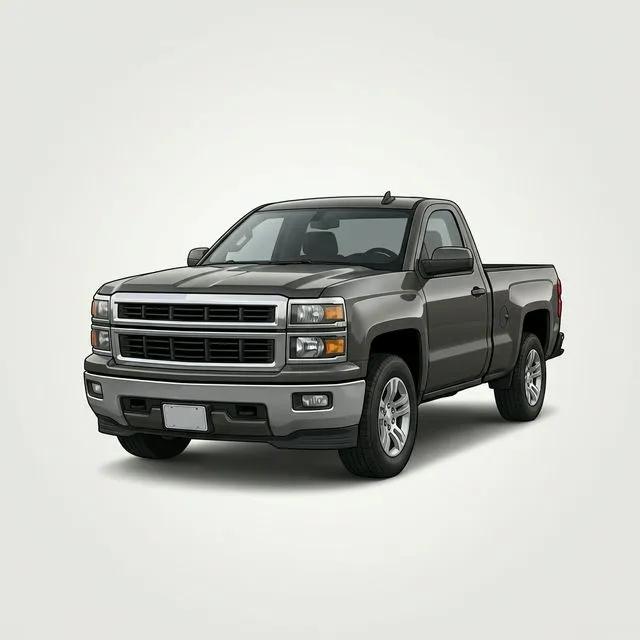
# Chevrolet Silverado 1500 2014–2018 Common Problems (3rd Generation)
The third-generation Chevrolet Silverado 1500, produced from 2014 to 2018, brought a squarer, more aggressive body style and vastly improved interior materials to General Motors' flagship pickup. GM modernized their legendary small-block V8 engines by adding direct injection and Active Fuel Management (AFM) to squeeze out better fuel economy during highway cruising. While these trucks are incredibly popular and comfortable, they suffer from a handful of devastating mechanical flaws that plague the entire production run. The transmission tuning logic and the cylinder deactivation hardware act as ticking time bombs if the truck has not received obsessive preventative maintenance. If you are inspecting a used 2014-2018 Silverado, knowing exactly how to test these specific failure points is the only way to avoid buying a truck destined for the scrap heap.
Overall Reliability Snapshot
This generation of the Silverado presents a massive gamble on the used market. The truck's core architecture—the frame, suspension, and body styling—is robust and beloved by owners. However, the powertrain reliability is incredibly polarized. If you secure a well-maintained truck where the previous owner disabled the AFM system early and serviced the transmission fluid every 30,000 miles, the truck can easily surpass 200,000 miles.
Conversely, trucks treated to traditional 10,000-mile dealer oil intervals act as financial black holes. The lifters responsible for the V8-to-V4 transition fail catastrophically and wipe out the camshaft. Simultaneously, the torque converter in the 6-speed and 8-speed automatic transmissions is infamous for breaking apart and pushing metal shards through the entire gearbox. You must approach this generation with profound skepticism and rely entirely on test drive symptoms and documented service history.
Most Common Problems
1. Active Fuel Management (AFM) Lifter Collapse
What happens: The engine begins ticking or clattering loudly from the top end. Shortly after, the engine stumbles, loses immense amounts of power, and flashes a check engine light for a cylinder misfire (often cylinders 1, 4, 6, or 7).
Why it happens: To save fuel, the AFM system collapses specific valve lifters to shut off four cylinders during light acceleration. These complex, spring-loaded lifters rely entirely on pristine oil pressure. If dirt or sludge builds up due to long oil change intervals, the locking pins fail. The lifter refuses to expand, creating a massive gap that hammers the camshaft lobes to dust.
How to check in 20 minutes: Start the truck from dead cold and listen near the front wheel wells for a rhythmic, mechanical tapping sound. Drive the truck onto the highway, let it shift into V4 mode (indicated on the dash cluster), and gently press the gas. Feel for severe hesitation or rough running when it transitions back to V8 mode.
Typical repair cost: Replacing the lifters and a scored camshaft requires removing the cylinder heads. Expect a staggering repair bill between $3,500 and $4,500.
Negotiation leverage: Extreme. A ticking 5.3L or 6.2L V8 is a dead engine walking. Demand a $4,000 discount or walk away immediately.
2. Transmission Shudder and Torque Converter Failure (Chevy Shake)
What happens: While cruising at steady highway speeds (between 40 and 60 mph), the entire truck vibrates violently, mimicking the sensation of driving over aggressive rumble strips on the side of the road.
Why it happens: The torque converter clutch applies unevenly due to degraded transmission fluid failing to manage moisture and glazing. The clutch slips rapidly, sending harsh vibrations through the driveline. If ignored, the torque converter physically disintegrates, pumping a lethal slurry of metal shavings into the gears and valve body.
How to check in 20 minutes: Find a smooth stretch of road. Lock the cruise control exactly at 45 mph, then 55 mph, and then 65 mph. Focus intensely on the floorboard and your seat cushion. If the truck shudders rhythmically without the steering wheel shaking (which would indicate bad tires), the transmission is slipping.
Typical repair cost: A fluid flush using the updated Mobil 1 synthetic ATF costs $300 but rarely acts as a permanent cure if damage is done. Replacing the torque converter runs $1,500. Rebuilding a contaminated transmission costs upwards of $4,500.
Negotiation leverage: High. This is a notorious flaw. Any driveline shudder equals a dying transmission. Reject the truck unless the seller drops the price by $3,500.
3. A/C Condenser Cracking and Freon Leaks
What happens: The air conditioning system suddenly blows warm or completely hot air because the refrigerant (Freon) has entirely leaked out of the closed loop system.
Why it happens: GM manufactured the A/C condenser (mounted right behind the front grille) with incredibly weak welds at the upper mounting brackets. Engine vibration and chassis flex cause the brackets to snap, creating a micro-crack in the aluminum tubing that slowly bleeds the expensive R1234yf refrigerant into the atmosphere.
How to check in 20 minutes: Turn the A/C to its lowest temperature setting during your test drive. If it fails to blow ice-cold air within two minutes, the system is empty. Open the hood and inspect the top corners of the condenser grid for wet, oily residue (refrigerant oil) collecting dust.
Typical repair cost: Replacing the flawed condenser with an updated aftermarket unit and recharging the system with expensive new refrigerant costs between $800 and $1,200.
Negotiation leverage: Medium. It will not leave you stranded, but you cannot survive summer without it. Ask for a $1,000 price drop.
4. Steering Wheel Position Sensor Failure (StabiliTrak Errors)
What happens: The dashboard illuminates the "Service StabiliTrak" warning message. Simultaneously, the turn signals may refuse to cancel automatically after a turn, or the steering feels unexpectedly stiff.
Why it happens: The sensor monitoring the steering wheel's exact angle degrades internally. The truck's computer relies on this sensor to determine if you are sliding or turning. When it feeds erratic data, the system disables traction control entirely as a safety measure.
How to check in 20 minutes: Navigate tight turns in a deserted parking lot. Take note if the blinker stays on after straightening the wheel. Watch the dash cluster carefully for any StabiliTrak or ABS warnings popping up during sharp maneuvers.
Typical repair cost: The steering wheel angle sensor itself is cheap, but accessing it requires removing the steering column components. Expect to pay a mechanic around $300 to $450.
Negotiation leverage: Low. It is mostly a nuisance issue rather than a catastrophic failure. Use it to shave a few hundred dollars off the asking price.
5. Vacuum Pump Failure (Hard Brake Pedal)
What happens: When you press the brake pedal, it feels impossibly stiff, like stepping on a brick, requiring immense leg strength to bring the truck to a halt, especially right after starting the engine.
Why it happens: The engine-driven mechanical vacuum pump, which provides the suction necessary to assist the power brakes, fails internally. The internal vanes sheer off, slashing the vacuum supply to the brake booster.
How to check in 20 minutes: Before starting the truck, press the brake pedal three times to deplete residual vacuum. Start the engine while holding the pedal down; it should sink softly an inch or two. If it remains rock hard, the pump is dead.
Typical repair cost: Replacing the vacuum pump and cleaning the debris out of the oil lines costs around $600 to $800 at an independent shop.
Negotiation leverage: Medium. A stiff brake pedal is a massive safety hazard that must be addressed before driving the truck home. Demand an $800 discount.
What This Generation Gets Right
- Exceptional Cabin Quietness: GM utilized triple door seals and acoustic glass, making the Silverado's interior remarkably isolated from highway wind noise and tire roar.
- User-Friendly Infotainment: The Chevrolet MyLink system remains highly responsive and intuitive, featuring easy smartphone integration compared to rivals of the same era.
- Traditional V8 Power: The 5.3L and 6.2L V8 engines provide outstanding towing power and a legendary exhaust note without relying on complex turbochargers.
- Inlaid Door Design: The doors tuck directly into the body sides rather than overlapping the roof, significantly improving aerodynamics and reducing cab vibrations.
Fast Pre-Purchase Checklist
- Cold-start the truck and listen religiously for any sharp, rhythmic ticking from the top of the V8 engine, indicating a doomed AFM lifter.
- Cruise steadily at 55 mph and monitor the seat and floor for the infamous "Chevy Shake" caused by a dying torque converter.
- Blast the A/C on maximum cold and inspect the top corners of the front condenser for oily, dirt-caked cracks if the air blows warm.
- Pump the brake pedal upon startup to verify the vacuum pump provides immediate power-assist to the braking system.
- Check the dashboard during sharp, slow-speed turns for any spontaneous "Service StabiliTrak" warnings.
- Demand service records detailing transmission fluid flushes explicitly performed before the 45,000-mile mark.
Should You Buy One?
You should only buy a 3rd-generation Chevy Silverado if you possess a profound understanding of its mechanical risks and budget accordingly. While comfortable and remarkably quiet on the highway, buying this generation of Silverado blind is a massive mistake. The fatal combination of AFM lifter failure and self-destructing torque converters means this truck carries a distinctly "High" risk rating on the used market.
If you find a pristine example, your absolute first step after purchasing the vehicle should be investing in an aftermarket OBD2 device to permanently disable the V4 mode (AFM). Disabling this feature drastically increases the survival rate of the engine lifters. If the seller lacks extensive service records or hesitates to let you take it on a high-speed highway test to check for shuddering, walk away immediately. There are too many Silverados on the market to risk buying a bad one.
Final Advice Before You Commit
The 2014-2018 Silverado is not a vehicle where you can trust a simple visual inspection or a quick five-minute drive around the block. You must provoke the transmission at highway speeds to expose the torque converter slip, and you must hear the engine when it is completely cold to catch lifter ticks. Never compromise on these two tests.
If the truck passes your intense test drive, you are not out of the woods yet. Run a free listing assessment below to ensure the seller is not asking premium money for a truck with impending repair needs. Once negotiated, generate an inspection checklist to hand to an independent mechanic—pay them specifically to scan the transmission module for hidden slip codes before signing any paperwork.
Check common model issues before you buy
Run a model risk assessment to spot known problems, prioritize checks, and avoid expensive surprises.
Ready to reduce model-specific risk?
Assess model issues first, then verify findings during your inspection and negotiation.