Honda Civic 2016-2021 Common Problems (10th Gen)
Updated 2026-02-19 · Honda Civic · 2016–2021
The 10th-gen Civic is fundamentally solid, but catastrophic AC condenser failures and 1.5T engine oil dilution necessitate a thorough pre-purchase inspection.
MotorMigo Risk Card
Top things to check
- Overall Reliability Snapshot
- Most Common Problems
- 1. AC Condenser and Compressor Failure
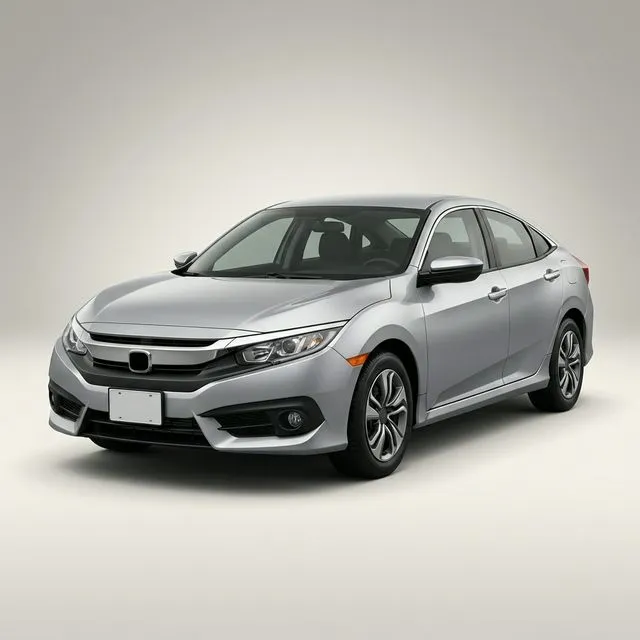
# Honda Civic 2016–2021 Common Problems (10th Generation)
The 10th-generation Honda Civic debuted for the 2016 model year and completely reinvented the struggling compact nameplate. Honda ditched the uninspired design of the previous era for an aggressive, low-slung aesthetic, completely re-engineered chassis, and a highly anticipated 1.5-liter turbocharged engine. If you want a commuter car that actually feels engaging to drive without penalizing your wallet at the gas pump, the 10th-gen Civic sits at the top of the heap. However, introducing forced induction to a mass-market economy car inevitably introduced a few growing pains. While still vastly more dependable than most European combatants, this generation broke from Honda's "just add oil" reputation by introducing a few widespread, highly specific failure points. Finding a clean example requires you to look far beyond the shiny paint and actually investigate the climate control system and the engine dipstick.
Overall Reliability Snapshot
The 2016-2021 Civic is a tale of two distinct powertrains. Base model sedans equipped with the naturally aspirated 2.0-liter engine remain as reliably bulletproof as any Civic from the 1990s. The higher trims utilizing the heavily marketed 1.5-liter turbocharged engine (1.5T), conversely, triggered massive recalls due to severe fuel dilution in the engine oil, specifically in cold-weather climates. While Honda issued software updates to mitigate the problem, you must verify the maintenance history to ensure a previous owner did not drive thousands of miles on fuel-thinned lubricant. More universally, almost every single 10th-generation Civic will face catastrophic air conditioning failure at some point. Honda's supplier used defective materials for the AC condenser and compressor shaft seal, leading to massive refrigerant leaks that the dealership will often try to avoid covering. While the mechanical bones of the chassis and transmissions are built to last, you must budget for localized headaches and thoroughly vet any used example before signing the paperwork.
Most Common Problems
1. AC Condenser and Compressor Failure
What happens: The air conditioning system completely stops blowing cold air, usually manifesting right at the beginning of summer. Refilling the refrigerant only works for a few days before it inevitably leaks out again.
Why it happens: Honda's supplier manufactured the condenser units with microscopic structural flaws, causing them to crack and bleed the modern, incredibly expensive R-1234yf refrigerant. Additionally, the compressor shaft seals frequently fail, compounding the leak.
How to check in 20 minutes: Upon starting the test drive, drop the temperature dial to "Lo" and crank the blower fan to maximum. Wait exactly two minutes. If the air coming from the center vents is barely cool or actively warm, the system has failed. Look through the lower front grille with a flashlight; dark, oily residue on the silver condenser fins indicates a major leak.
Typical repair cost: Independent shops charge $800 to $1,200 to replace the condenser and recharge the expensive R-1234yf refrigerant. If both the condenser and compressor are bad, expect a $2,000 bill.
Negotiation leverage: A non-functional AC in a 10th-gen Civic guarantees a massive repair bill. Demand at least $1,500 off the asking price, or simply walk away and find an example with a verifiable, recent AC replacement.
2. 1.5T Engine Oil Dilution
What happens: Gasoline actively seeps past the piston rings and mixes into the engine oil in the crankcase. The oil level rises dangerously high on the dipstick, and the cabin reeks of raw fuel.
Why it happens: In cold weather, the 1.5-liter turbocharged engine struggles to reach optimal operating temperature quickly. Due to the direct injection design, unburned fuel spray washes down the cylinder walls and dilutes the engine oil before the heat can evaporate it.
How to check in 20 minutes: Park the car on level ground. Pull the engine oil dipstick and smell it closely. If it smells strongly of gasoline instead of used oil, you have dilution. Wipe the dipstick, reinsert it, and pull it again. If the oil level is significantly above the top "Max" dot, the crankcase is overfilled with fuel.
Typical repair cost: Changing the oil costs $60. However, if the car was driven extensively with diluted oil, the thinned lubricant may have prematurely worn the main bearings or turbo bearings, requiring a multi-thousand dollar engine rebuild down the line.
Negotiation leverage: If the oil smells heavily of fuel and sits above the fill line, completely walk away from the purchase. The long-term engine damage is impossible to definitively diagnose on a test drive.
3. Infotainment System Glitches and Blackouts
What happens: The Display Audio touchscreen freezes, drops Bluetooth connections randomly, or goes completely black and refuses to power on.
Why it happens: The Android-based infotainment system suffers from weak internal processing power and poorly optimized software. Over time, cached data overwhelms the system memory, causing hard crashes.
How to check in 20 minutes: Plug your phone in via USB to test Apple CarPlay or Android Auto. Rapidly switch between maps, music, and the Honda home screen. Listen for audio cutouts and watch for severe input lag.
Typical repair cost: A simple battery disconnect often forces a hard reset for free. If the internal motherboard is fried, a replacement head unit from the dealer costs $1,000 to $1,500.
Negotiation leverage: If the screen lags heavily or drops your connection during the test drive, point it out and ask for a $400 discount, citing the need to potentially replace the head unit with an aftermarket alternative.
4. Honda Sensing Radar Calibration Issues
What happens: The dashboard lights up with warnings that the Collision Mitigation Braking System (CMBS) or Adaptive Cruise Control is disabled or requires service.
Why it happens: The radar sensor is mounted very low in the front bumper or grille (depending on the year). Minor parking lot bumps, heavy rain, snow, or a poorly executed windshield replacement can knock the sensor out of alignment.
How to check in 20 minutes: Test the adaptive cruise control on the highway. Ensure it accurately tracks the car ahead. Scroll through the driver information screen and ensure no "Honda Sensing" error messages are stored.
Typical repair cost: Having a dealership aim and recalibrate the radar system costs $250 to $400. If the sensor unit itself is physically cracked from a rock strike, parts and labor will exceed $1,000.
Negotiation leverage: Any ADAS (Advanced Driver Assistance System) warning light is grounds for a $500 deduction, as independent shops rarely possess the expensive target boards required to recalibrate the system.
5. Sticky and Clicking Steering
What happens: When driving on the highway, the steering wheel effectively "sticks" in the dead-center position. It requires a jerky, noticeable amount of force to make a micro-correction, making the car feel difficult to keep in its lane.
Why it happens: The Electronic Power Steering (EPS) rack suffers from internal binding on the worm gear, lacking proper lubrication from the factory.
How to check in 20 minutes: Accelerate to 70 mph on the highway and hold the steering wheel dead center for a few seconds. Attempt to make a tiny, smooth micro-adjustment to the left or right. If you feel resistance that suddenly gives way with a slight "click," the rack is binding.
Typical repair cost: Replacing the entire electronic steering rack at the dealership costs $1,800 to $2,500.
Negotiation leverage: If you identify sticky steering, use it to your absolute advantage. Inform the seller the steering rack is failing and demand a $1,500 reduction, or abandon the deal entirely.
What This Generation Gets Right
- Exceptional Driving Dynamics: Unlike most numb compact cars, the 10th-gen Civic features a sophisticated multi-link rear suspension and low center of gravity, making it genuinely fun to drive on a winding backroad.
- Cavernous Cargo Space: The hatchback model provides a massive 25.7 cubic feet of storage space behind the rear seats, easily shaming subcompact SUVs in pure utility.
- Punchy 1.5T Performance: If you buy one with the oil dilution software update applied, the turbocharged engine delivers fantastic low-end torque making highway passing effortless.
- Robust CVT Tuning: Honda programmed their Continuously Variable Transmission to simulate traditional gears under hard acceleration, eliminating the annoying "rubber band" drone found in competitors.
Fast Pre-Purchase Checklist
- Turn the AC to maximum cold immediately; if it blows warm after two minutes, assume the condenser is destroyed.
- Pull the oil dipstick and smell for a pungent gasoline odor, ensuring the level is not over the "Max" mark.
- Connect your phone and test Apple CarPlay/Android Auto for severe freezing or input crashes.
- Hold the steering wheel dead-center at 70 mph to detect binding or sticky micro-adjustments.
- Engage the adaptive cruise control to ensure the front radar sensor is properly calibrated and functional.
- Check the lower front bumper for impact damage that could have cracked the expensive radar unit.
- Ensure the electronic parking brake engages and releases smoothly without dashboard warning lights.
- Look directly under the valve cover on 1.5T models for signs of oil seepage indicating a failing gasket.
- Confirm whether the vehicle still retains the factory battery, as Honda OEM batteries typically die after just three years.
Should You Buy One?
Yes, provided you shop with extreme caution and heavily scrutinize the exact trim level you intend to purchase. The 2016-2021 Honda Civic is arguably the best-driving compact car of its era, offering unmatched interior packaging, great fuel economy, and sharp styling. If you opt for the base LX or Sport trims with the naturally aspirated 2.0-liter engine, you are buying a 300,000-mile car that will ask for very little in return.
However, if you are shopping for an EX, Touring, or Si trim featuring the 1.5-liter turbocharged engine, your margin for error shrinks significantly. You must verify that the oil dilution software update was performed early in the car's life. Regardless of engine choice, you absolutely must assume the air conditioning system is prone to failure. Do not blindly trust the Honda badge on the hood; demand service records and physically verify the condenser is intact. If you find a well-maintained example with cold AC and clean oil, you will own a fantastic daily driver.
Final Advice Before You Commit
Buying a used 10th-generation Civic requires you to separate emotion from hard mechanical facts. The aggressive styling and excellent driving dynamics can quickly make you excuse a warm air conditioner or a shaky steering rack. Do not let the thrill of a test drive mask the reality of a $2,000 imminent repair bill. You are buying a machine, and machines require strict verification.
Protect yourself by demanding total transparency from the seller. Run a free listing assessment to uncover the true market value of that specific trim, and generate an inspection checklist to systematically vet the AC system and engine compartment before handing over a single dollar.
Check common model issues before you buy
Run a model risk assessment to spot known problems, prioritize checks, and avoid expensive surprises.
Ready to reduce model-specific risk?
Assess model issues first, then verify findings during your inspection and negotiation.