Toyota Camry 2012-2017 Common Problems (7th Gen)
Updated 2026-02-19 · Toyota Camry · 2012–2017
The 7th-gen Camry is phenomenally reliable, but models from 2012-2014 suffer from a widely documented transmission torque converter shudder that you absolutely must test for.
MotorMigo Risk Card
Top things to check
- Overall Reliability Snapshot
- Most Common Problems
- 1. Torque Converter Shudder (2012-2014 Models)
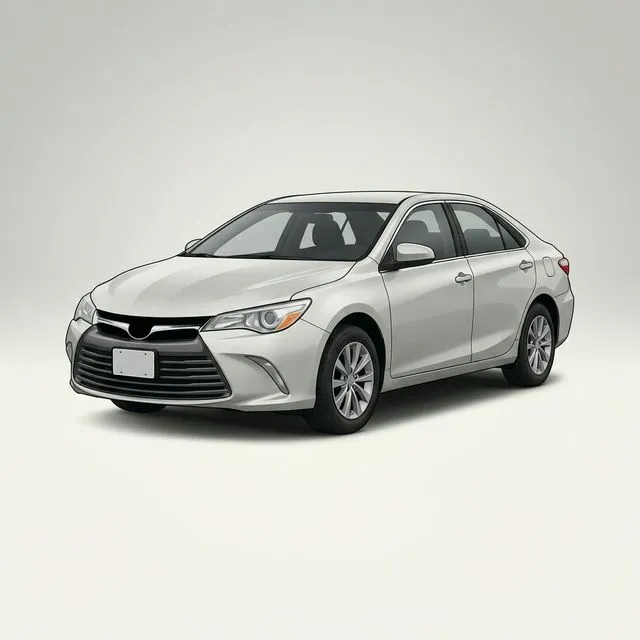
# Toyota Camry 2012–2017 Common Problems (7th Generation)
The seventh-generation Toyota Camry (internal code XV50) represents exactly what most buyers want when shopping the used midsize sedan market: completely drama-free transportation. Debuting in 2012 with sharper angles and a surprisingly stiffened chassis compared to its predecessor, it quickly reasserted itself as the default choice for millions of commuters. Toyota didn't reinvent the wheel with the powertrains, sticking to the trusted 2.5-liter four-cylinder and the silky-smooth 3.5-liter V6, both mated to a conventional six-speed automatic transmission. For the vast majority of owners, checking the oil and rotating the tires guarantees a 300,000-mile lifespan.
Despite its legendary status as the undisputed king of automotive reliability, the 7th-generation Camry is not entirely bulletproof. Specifically, cars built between 2012 and 2014 harbor a known internal transmission defect that can manifest as a violent shaking feeling during light acceleration. Because Toyota initially attempted to fix this with a mere software update before begrudgingly extending the warranty on the torque converter, many used examples floating around the market today were never physically repaired. If you don't know exactly how to trigger this symptom on a test drive, you might unknowingly purchase a car requiring a $2,000 transmission overhaul.
Overall Reliability Snapshot
To put it bluntly, the typical 2012-2017 Camry will easily outlast its contemporaries from Ford, Chevrolet, and Nissan. The basic architecture of the 2.5L engine (2AR-FE) is widely considered one of the most robust four-cylinder motors ever mass-produced, free of the excessive oil consumption issues that plagued the previous generation's 2.4L engines. The interior plastics, while somewhat uninspired and prone to minor scuffing, hold up remarkably well to a decade of UV abuse.
However, your shopping strategy heavily relies on the exact model year you target. Toyota completely refreshed the Camry for the 2015 model year, swapping out nearly every exterior body panel and overhauling the suspension tuning. More importantly, the 2015 update quietly eliminated the torque converter lock-up issues that plagued the 2012-2014 batches. If your budget limits you to the earlier half of this generation, you must dedicate your entire test drive to intensely scrutinizing the automatic transmission's shifting behavior under light loads. Beyond that glaring weak point, you are largely just checking for basic maintenance neglect.
Most Common Problems
1. Torque Converter Shudder (2012-2014 Models)
What happens: When accelerating gently at speeds between 25 and 45 mph, the car violently shudders or vibrates as if you are driving over a continuous rumble strip on the shoulder of the highway.
Why it happens: The internal lock-up clutch inside the torque converter was manufactured with defective friction materials and poorly calibrated software. When the transmission attempts to enter a fuel-saving "flex-lock" mode, the clutch slips and chatters aggressively, sending massive vibrations through the drivetrain.
How to check in 20 minutes: Find a smooth, flat road. Accelerate gently and steadily up to 40 mph, allowing the transmission to shift into 3rd or 4th gear. Hold your foot very lightly on the accelerator to maintain speed. If the car starts violently vibrating from the floorboards, the torque converter is failing.
Typical repair cost: Performing a transmission fluid flush and adding a friction modifier "shudder fix" additive costs $150 and might mask the symptom for a few months. However, the only true permanent repair is replacing the torque converter entirely, which costs $1,500 to $2,000 at an independent transmission shop.
Negotiation leverage: If a 2012-2014 model exhibits the shudder on a test drive, unequivocally demand a $1,500 price reduction to cover the cost of a new torque converter, or simply walk away and find a 2015+ model.
2. Melting and Sticky Dashboard Grievances
What happens: The dark, soft-touch dashboard material begins to chemically break down, becoming shiny, sticky to the touch, and highly reflective in direct sunlight.
Why it happens: Toyota used a defective polymer blend for the dashboard assembly that degrades rapidly when subjected to intense heat and UV radiation over several years, particularly in southern climates.
How to check in 20 minutes: Park the car in the sun. Run your hand firmly across the top of the dashboard above the gauge cluster and passenger airbag. If your hand drags or feels sticky residue, the dashboard is melting. A severely degraded dash will also reflect a terrible glare onto the inside of the windshield.
Typical repair cost: Custom-fit carpet or suede dash covers cost $50 and easily mask the issue. If you want a brand-new dashboard pad installed by the dealer, expect to pay over $1,200 for parts and the extensive labor required to dismantle the interior.
Negotiation leverage: A sticky dashboard won't leave you stranded, but it makes the interior feel cheap and creates a visual safety hazard. Use it to knock $200 off the asking price.
3. AC Evaporator Odor (Musty Smell)
What happens: The first few seconds after turning on the air conditioning system, a pungent, musty odor—often described as smelling like wet socks or vinegar—blows through the cabin vents.
Why it happens: The design of the HVAC evaporator housing prevents water condensation from draining completely. The stagnant moisture breeds mold and mildew directly on the evaporator core fins.
How to check in 20 minutes: Roll up all the windows. Start the engine, ensure the AC is set to blow cold air, and turn the fan on high. Immediately lean close to a vent and inhale deeply. If a blast of moldy, stale air hits you before the system gets fully cold, the evaporator is contaminated.
Typical repair cost: A specialized AC cleaning foam sprayed directly into the evaporator drain tube costs $20 and usually neutralizes the mold for a year or two.
Negotiation leverage: Don't kill the deal over a bad smell. Point it out to the seller and use it to ask for a token $50 discount to cover an interior detailing service.
4. Entune Infotainment Reboots
What happens: The central touchscreen suddenly goes blank, freezes when attempting to connect to a phone via Bluetooth, and then randomly reboots showing the Toyota startup logo while driving.
Why it happens: The older generations of Toyota's Entune software suffer from memory leaks and poor hardware optimization, making the head unit highly susceptible to crashing when pairing with newer, modern smartphones.
How to check in 20 minutes: Pair your smartphone via Bluetooth before beginning the test drive. Stream music and actively skip tracks while simultaneously flipping through the car's built-in navigation or settings menus to stress-test the processor.
Typical repair cost: Dealerships will often perform a software update for roughly $120, which may or may not stop the reboots. Replacing the outdated factory radio with a modern aftermarket Apple CarPlay/Android Auto unit costs roughly $400 for a quality install.
Negotiation leverage: If the screen freezes or drops your call during the test drive, mention that the radio is failing and request a $300 deduction to put toward replacing it with an aftermarket head unit.
What This Generation Gets Right
- Immortal 2.5L Engine: The 2AR-FE four-cylinder engine utilizes a highly durable timing chain and features simple, conventional port fuel injection, avoiding the nasty carbon buildup issues found in modern direct-injected engines.
- Buttery Smooth V6: If you can find the rarer 3.5L V6 model, you are treated to 268 horsepower of silky, immediate acceleration that shames many modern turbocharged luxury cars in straight-line refinement.
- Cheap Maintainability: Every independent mechanic on the planet knows how to fix an XV50 Camry. Parts are ubiquitous, oil changes are incredibly simple to perform in a driveway, and consumable items like brakes and tires are extremely inexpensive.
- Incredibly Roomy Rear Seat: The 7th-gen sedan boasts excellent rear-seat headroom and legroom, easily accommodating three adults in the back without the claustrophobic sloping roofline found in the subsequent 8th-generation model.
Fast Pre-Purchase Checklist
- Accelerate smoothly to 40 mph on a flat road holding a constant, light throttle position to test the transmission for violent shaking or "shuddering."
- Press your hand firmly onto the top of the dashboard to ensure the polymer material hasn't melted into a sticky, reflective mess.
- Immediately smell the air coming from the vents upon turning on the AC to sniff out stagnant mold growth on the evaporator.
- Pair your smartphone to the Entune system via Bluetooth and attempt to play music to confirm the unit doesn't crash or spontaneously reboot.
- Listen for an abrasive "clunking" or "rattling" noise from the front suspension when driving over small bumps, which typically indicates worn sway bar end links (a cheap fix).
- Check the water pump pulley on the passenger side of the engine for pink, crusty dried coolant residue indicating an impending water pump failure.
Should You Buy One?
Yes, absolutely. The 2012-2017 Toyota Camry is the ultimate, low-risk appliance vehicle. It completely eschews flashy, experimental technology in favor of proven, old-school reliability. If you simply need a car to take you to work every single day for the next eight years without ever stranding you on the side of the highway, this is the gold standard.
However, you must be extremely cautious if you are targeting the 2012, 2013, or 2014 model years. The torque converter shudder is a real, expensive defect that can ruin the ownership experience of an otherwise flawless vehicle if you fail to detect it on a test drive. The optimal buying strategy is to target a 2015, 2016, or 2017 model, as these benefit from revised transmission programming, significantly better sound deadening, and updated exterior styling while retaining the bulletproof mechanicals. Find one with a clean title and evidence of regular oil changes, and you will own one of the most dependable machines ever built.
Final Advice Before You Commit
When inspecting a used Camry, remember that its primary enemy is not a massive engineering flaw, but rather human neglect. Because these cars are famous for never breaking down, many previous owners simply stopped maintaining them. They skip oil changes, ignore transmission fluid, and treat the car like an indestructible golf cart.
Do not reward a neglectful seller. Run a free listing assessment to ensure they haven't artificially inflated the price based purely on the "Toyota Tax," and generate an inspection checklist to systematically verify that the transmission shifts smoothly and the engine oil isn't pitch black. Buy on condition, not just the famous badge on the grill.
Check common model issues before you buy
Run a model risk assessment to spot known problems, prioritize checks, and avoid expensive surprises.
Ready to reduce model-specific risk?
Assess model issues first, then verify findings during your inspection and negotiation.