Toyota Corolla 2014-2019 Common Problems (11th Gen)
Updated 2026-02-19 · Toyota Corolla · 2014–2019
The 11th-gen Corolla is incredibly reliable, with minor CVT software or infotainment issues being the main concerns.
MotorMigo Risk Card
Top things to check
- Overall Reliability Snapshot
- Most Common Problems
- 1. CVT Shudder and Delay
# Toyota Corolla 2014–2019 Common Problems (11th Generation)
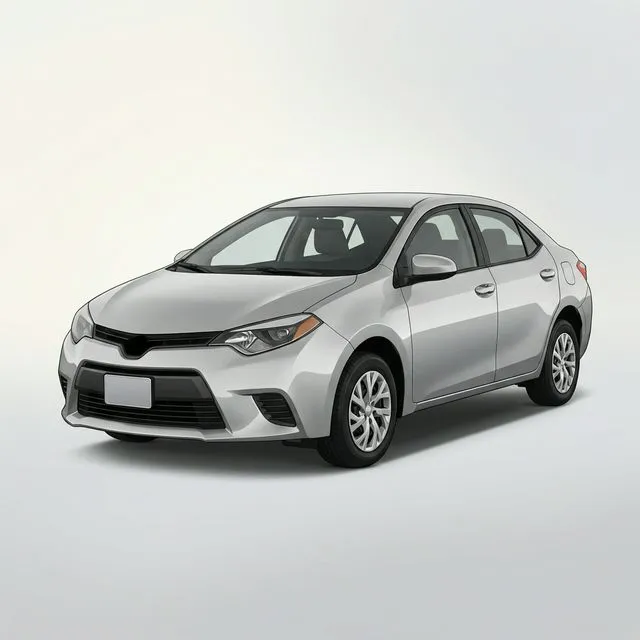
The 11th-generation Toyota Corolla hit the market for the 2014 model year, bringing sharper styling and a new Continuous Variable Transmission (CVT) to Toyota's legendary compact car formula. If you are looking for straightforward, reliable transportation, this generation of the Corolla is arguably one of the safest bets on the used market. It abandoned older four-speed automatics in favor of better fuel economy, while retaining the bulletproof 1.8-liter four-cylinder engine that has kept Corollas running past the 200,000-mile mark for decades. However, even a benchmark for reliability has specific failure points you must inspect before handing over your cash. By knowing exactly where to look, you can find a pristine example and avoid financing someone else's neglected maintenance.
Overall Reliability Snapshot
Make no mistake: the 2014-2019 Corolla boasts one of the lowest failure rates in its class. Unlike compacts from competitors that experimented with unproven turbochargers or complex dual-clutch transmissions during these same years, Toyota stuck to a naturally aspirated 1.8-liter engine architecture that had already been refined for over a decade. The biggest mechanical shift was the introduction of the CVTi-S transmission. Most mechanics agree that Toyota’s CVT implementation is far more robust than those found in rival brands from the same era, but it fundamentally requires clean fluid to survive. If previous owners skipped transmission services, you could inherit a shuddering gearbox. Beyond the drivetrain, most complaints center around the interior electronics, specifically the Entune infotainment system, and cheap interior plastics that rattle as the car ages. Mechanically, major component failures are exceedingly rare. If you find one with extensive service records, it will likely outlast your financing term with nothing more than standard fluid changes, brakes, and tires.
Most Common Problems
1. CVT Shudder and Delay
What happens: At low speeds, especially when accelerating from a dead stop or transitioning between reverse and drive, the transmission hesitates, jerks, or shudders noticeably before engaging smoothly.
Why it happens: The Continuously Variable Transmission relies on a steel belt and pulley system clamped by hydraulic pressure. Dirty, degraded transmission fluid loses its frictional properties, causing the belt to slip slightly against the pulleys. Additionally, early 2014 and 2015 models suffered from poorly calibrated transmission control module (TCM) software.
How to check in 20 minutes: Park the car on a flat surface. Shift from Park to Reverse, wait three seconds, then shift to Drive. Note the engagement delay. Next, perform a slow, rolling acceleration from a stoplight, feeling for a rubber-band-like shudder around 15 to 25 mph.
Typical repair cost: A simple fluid exchange runs $150 to $250. Software flashes cost $100 to $150 at the dealer. A total transmission replacement, if the pulleys are scored, costs $3,500 to $4,500.
Negotiation leverage: If you feel a mild shudder and the fluid is dark, negotiate $300 off for an immediate transmission service. If the engagement delay is severe, walk away.
2. Entune Infotainment Reboot Loop
What happens: The touchscreen radio freezes entirely, goes blank, or gets stuck in an infinite loop of rebooting the Toyota logo while driving, disabling Bluetooth, navigation, and audio controls.
Why it happens: The factory head units lack sufficient processing memory, and early firmware versions contained massive memory leak bugs. Heat exposure in the dashboard degrades the internal flash memory over years of summer parking, eventually corrupting the operating system.
How to check in 20 minutes: Ask the seller to leave the car running for 15 minutes. Connect your smartphone via Bluetooth, play music, and rapidly switch between the audio and navigation screens. Watch for profound lag or spontaneous restarts.
Typical repair cost: Dealer replacement head units cost upwards of $800. Aftermarket Apple CarPlay/Android Auto units with installation gear range from $300 to $600.
Negotiation leverage: If the screen freezes during the test drive, deduct $500 from the asking price to fund an aftermarket radio upgrade.
3. Evaporative Emissions (EVAP) System Leaks
What happens: The check engine light illuminates with codes pointing to a minor or massive EVAP leak (commonly P0456), though the car continues to drive perfectly fine.
Why it happens: The charcoal canister, purge valve, or even just the gas cap seal deteriorates over time. The Corolla's EVAP monitors are highly sensitive, and a cracked rubber hose near the fuel filler neck or a charcoal canister saturated from overfilling the gas tank will trigger an emissions failure.
How to check in 20 minutes: Turn the key to the ON position without starting the engine to verify the Check Engine Light works. Start the engine; if the light remains on, scan the OBD2 port. Inspect the gas cap rubber O-ring for dry rot or cracking.
Typical repair cost: A new gas cap is $25. A purge valve replacement is $150. A full charcoal canister assembly replacement will cost $500 to $700.
Negotiation leverage: Use any check engine light as grounds for a $500 discount, specifically requesting the seller scan the code. If it is an EVAP code, buy with confidence but save the cash for the repair.
4. Premature Brake Wear and Warped Rotors
What happens: The steering wheel shakes violently in your hands when applying the brakes at highway speeds, or you hear constant squeaking during low-speed stops.
Why it happens: The factory brake rotors on the 11th-generation Corolla are relatively thin and prone to heat distortion. Hard braking, especially in hilly terrain or stop-and-go commuting, warps the rotor surface.
How to check in 20 minutes: Accelerate to 60 mph on an empty highway and apply firm, steady pressure to the brake pedal. Pay strict attention to vibrations translating through the steering column or pulsing in the brake pedal itself.
Typical repair cost: A front brake job (new high-quality aftermarket rotors and ceramic pads) costs $300 to $450 at an independent shop.
Negotiation leverage: Brake pulsation is a direct safety and comfort issue. Demand $400 off the price to cover an immediate front brake replacement.
5. Rattling Dashboard and Interior Trim
What happens: You hear constant plastic-on-plastic buzzing or rattling sounds coming from the passenger side dashboard, the center console, or the door panels when driving over rough pavement.
Why it happens: Toyota utilized harder, cheaper plastics in this generation to keep production costs low. As the vehicle ages and cycles through hot and cold seasons, the plastic mounting clips shrink and lose their clamping force, creating vibration gaps.
How to check in 20 minutes: Turn the radio completely off. Drive over a section of textured pavement, speed bumps, or a gravel road. Listen closely to the passenger side airbag cover area and the driver's side gauge cluster hood.
Typical repair cost: Negligible if you fix it yourself using adhesive felt tape. Dealerships charge $150 an hour purely for diagnostic tear-down time, often resulting in $300 bills just to insert foam padding.
Negotiation leverage: This is a cosmetic annoyance, but point out the rattles during the test drive to frame your lower offer. Deduct $100 for the loss of refinement.
6. Paint Peeling (Super White / Blizzard Pearl)
What happens: Large sheets of white paint delaminate and peel off down to the bare gray primer, most commonly starting on the roof, hood, and window pillars.
Why it happens: Toyota suffered a manufacturing defect with specific white paint codes (040 Super White and 070 Blizzard Pearl) across multiple models where the primer failed to properly bond with the electro-deposition layer due to sunlight degradation.
How to check in 20 minutes: Stand back and look for any chalky, matte patches on horizontal surfaces. Inspect the edges of the roof line near the windshield weatherstripping and the leading edge of the hood for flaking paint.
Typical repair cost: Repainting a roof and hood properly costs $1,500 to $2,500. Note that Toyota did issue a warranty enhancement program, but it has time limits that many 2014-2015 models have now aged out of.
Negotiation leverage: Do not buy a peeling white Corolla unless you are securing a massive $2,000 discount, as the entire car will likely eventually shed its paint.
What This Generation Gets Right
- Bulletproof 1.8L Engine: The 2ZR-FE engine uses a robust timing chain rather than a belt, and routinely crests 250,000 miles with basic oil changes.
- Exceptional Fuel Economy: Thanks to aerodyamic tweaks and the CVT, real-world highway fuel economy easily exceeds the EPA-rated 38 mpg.
- Cavernous Rear Seat: The 11th generation stretched the wheelbase, providing 41.4 inches of rear legroom, rivaling many midsize sedans.
- Standard Safety Tech (2017+): Toyota Safety Sense P (TSS-P) became standard in 2017, bringing adaptive cruise control, lane departure alert, and pre-collision braking to all trims.
- Resale Value: A clean Corolla depreciates slower than almost any other compact on the market, protecting your financial investment.
Fast Pre-Purchase Checklist
- Verify the transmission fluid has been changed at least once if the mileage is over 60,000.
- Connect your phone via Bluetooth and navigate menus to test the Entune system for lag.
- Perform a rolling stop transition to feel for CVT engagement delay.
- Check the roof and hood for peeling paint, specifically on white models.
- Brake firmly from 60 mph to check for steering wheel vibration indicating warped rotors.
- Look for a glowing Check Engine Light and scan the OBD2 port for EVAP leak codes.
- Test the air conditioning; ensure cold air blows consistently from all vents within two minutes.
- Check the date codes on the tires, as economy cars are frequently sold with dry-rotted rubber.
- Inspect the trunk floor beneath the spare tire for signs of rear-end collision repair or water intrusion.
Should You Buy One?
Yes, without hesitation. The 2014-2019 Toyota Corolla is the quintessential smart financial decision on the used car market. While it lacks the driving engagement of a Mazda 3 or the turbocharged torque of a Honda Civic, it makes up for those deficits by simply never breaking down. This generation strikes an excellent balance of modern amenities—especially the 2017 update which brought advanced safety features—and proven, old-school mechanical simplicity under the hood.
Your biggest risk is simply overpaying. Because Corollas hold their value so well, you will face steep asking prices. You must ensure you are not paying a premium price for a car that a previous owner treated like a disposable appliance. Limit your search to examples with complete maintenance histories, specifically focusing on transmission fluid changes. If you locate a well-maintained 2017 or 2018 model, you are buying a car that will serve you faithfully for another decade.
Final Advice Before You Commit
Never let a sterling reputation blind you to the reality of the specific metal parked in front of you. A neglected Corolla will drain your wallet just as quickly as any other mistreated vehicle. You are buying the previous owner's maintenance habits, not just the badge on the grille. Always run an OBD2 scanner, take the car on a proper highway test drive, and verify the title status before negotiating.
Protect your investment by taking control of the transaction. Run a free listing assessment to uncover hidden pricing details, and generate an inspection checklist to carry with you to the seller's lot. Let the data drive your decision, not emotion.
Check common model issues before you buy
Run a model risk assessment to spot known problems, prioritize checks, and avoid expensive surprises.
Ready to reduce model-specific risk?
Assess model issues first, then verify findings during your inspection and negotiation.