Toyota RAV4 2013-2018 Common Problems (4th Gen)
Updated 2026-02-19 · Toyota RAV4 · 2013–2018
The 4th-gen RAV4 is generally a tank, but the 2013-2015 models suffer from a notorious transmission torque converter shudder that must be physically tested for.
MotorMigo Risk Card
Top things to check
- Overall Reliability Snapshot
- Most Common Problems
- 1. Torque Converter Shudder (2013-2015 Models)
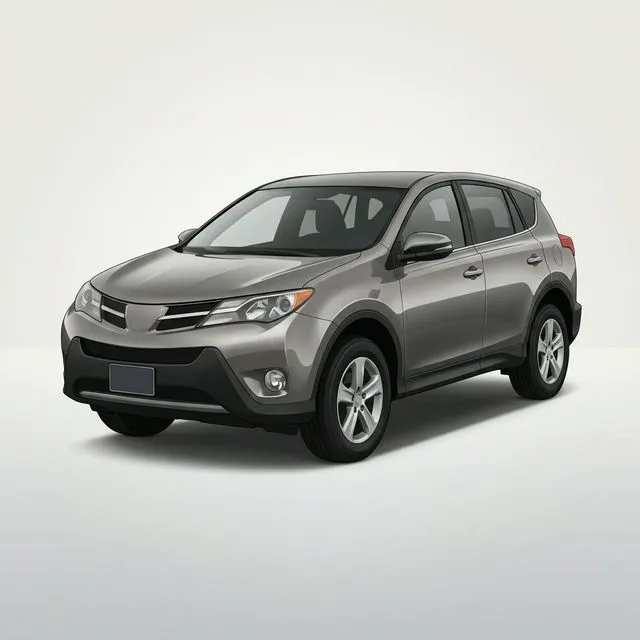
# Toyota RAV4 2013–2018 Common Problems (4th Generation)
The fourth-generation Toyota RAV4 (internally known as the XA40) completely redefined the compact crossover segment by prioritizing immense cargo capacity and a refined ride over its predecessor's slightly rugged charm. Debuting for the 2013 model year, Toyota completely eliminated the thirsty V6 engine option and the quirky side-hinged rear door with its mounted spare tire, opting instead for a conventional top-hinged liftgate and focusing entirely on fuel efficiency. The result was a spectacularly successful, high-volume seller powered almost exclusively by the bulletproof 2.5-liter four-cylinder engine. For the vast majority of consumers, buying a used 4th-gen RAV4 is the automotive equivalent of buying blue-chip stock—boring, predictable, and practically guaranteed to run for 250,000 miles.
However, hiding beneath this reputation of utter indestructibility is a critical transmission flaw that plagued the early years of this generation. Much like its sedan sibling, the Camry, the 2013-2015 RAV4 models were equipped with a torque converter that frequently fails to lock up correctly, resulting in violent vibrations during light acceleration. If you blindly trust the Toyota badge on the grille and fail to test the transmission thoroughly, you could easily inherit a major repair bill.
Overall Reliability Snapshot
From a high-level perspective, the 2013-2018 RAV4 is vastly more reliable than contemporary rivals like the Ford Escape, Chevrolet Equinox, and Nissan Rogue. The 2.5L 2AR-FE engine is free from the timing chain stretch issues, widespread turbo failures, and severe oil consumption problems that defined the compact SUV landscape in the 2010s. The interior materials are hard-wearing, the suspension is robust, and the electrical systems are largely free of ghosts.
Your main objective when shopping for an XA40 RAV4 is navigating the mid-cycle refresh. For the 2016 model year, Toyota updated the exterior styling, added significantly more sound deadening material (a huge plus, as early models suffer from terrible wind noise), and, most importantly, quietly updated the transmission software and components to eliminate the torque converter shudder. Therefore, your shopping strategy should heavily lean toward securing a 2016, 2017, or 2018 model if your budget allows it. If you must shop in the 2013-2015 bracket, your entire inspection must revolve around the transmission.
Most Common Problems
1. Torque Converter Shudder (2013-2015 Models)
What happens: When accelerating very gently at speeds between 25 and 45 mph, the entire RAV4 begins to violently shake and shudder, mimicking the sensation of driving directly over a continuous rumble strip. The shaking stops immediately if you aggressively stomp on the gas pedal or completely release it.
Why it happens: The internal lock-up clutch inside the torque converter assembly degrades prematurely due to weak friction materials and poorly calibrated factory software. When the vehicle attempts to enter a fuel-saving partial-lock state, the clutch surfaces slip, violently chattering against each other.
How to check in 20 minutes: You must get the RAV4 onto a smooth, flat road where you can safely drive between 30 and 45 mph. Provide very light, constant pressure on the accelerator pedal just to maintain your speed. Allow the transmission to shift into its middle gears. If the torque converter is failing, the floorboards and steering wheel will begin to aggressively vibrate.
Typical repair cost: A full transmission fluid drain-and-fill combined with a friction modifier additive costs roughly $150 and may temporarily hide the shudder. The honest, permanent fix requires dropping the transmission to replace the entire torque converter assembly, which independent transmission shops will bill between $1,800 and $2,200.
Negotiation leverage: If you detect a shudder on the test drive, unequivocally demand a massive $1,800 discount to cover the looming repair bill, or simply walk away from the car completely.
2. Leaking Water Pump
What happens: A puddle of pink, crusty dried coolant forms on the passenger side of the engine block near the serpentine belt, eventually leading to the engine overheating if the coolant level drops too low.
Why it happens: The bearing and seal inside the mechanical water pump wear out prematurely, allowing engine coolant to slowly seep past the pulley shaft and drip down the front of the block.
How to check in 20 minutes: Open the hood and shine a bright flashlight down the passenger side of the engine, directly at the pulleys spun by the large serpentine belt. Look for thick, chalky, pink residue splattered around the water pump pulley. With the engine running, listen closely to that area; a failing bearing will often produce a high-pitched grinding or whining noise.
Typical repair cost: Replacing the water pump and flushing the coolant system at an independent shop costs $350 to $500 depending on labor rates in your area.
Negotiation leverage: A leaking water pump is a perfect negotiation tool. It is an easy fix but absolutely vital to the engine's survival. Demand a $400 discount to cover the cost of immediate replacement.
3. Evap System Charcoal Canister Failure
What happens: The check engine light illuminates, and scanning the onboard diagnostics reveals codes related to a small evaporative emissions (EVAP) leak. Occasionally, the vehicle may struggle slightly to start immediately after filling the gas tank.
Why it happens: Toyota mounted the fragile charcoal canister beneath the chassis near the rear axle, completely exposing it to road debris, road salt, and deep puddles. The canister routinely cracks or becomes waterlogged over the years, destroying its ability to vent fuel tank vapors. Furthermore, owners who "top off" their gas tank by clicking the pump multiple times force raw liquid gasoline down the vent tube, instantly ruining the expensive charcoal filter.
How to check in 20 minutes: Without a specialized smoke-test machine, this is hard to verify visually unless the canister is overtly cracked. You must rely on an OBD2 scanner. Plug it into the port under the steering wheel and check for any stored or pending EVAP codes (like P0456 or P0442).
Typical repair cost: The charcoal canister assembly is an expensive part. Replacing it and the associated purge valves costs roughly $700 to $900 at a dealership.
Negotiation leverage: An active EVAP code will automatically fail state emissions testing. Do not buy the vehicle unless the seller drops the price by $800 to cover the repair, as chasing EVAP leaks can quickly become an expensive game of whack-a-mole.
4. Excessive Wind and Road Noise (2013-2015 Models)
What happens: Cruising at highway speeds forces you to yell at your passengers over a cacophony of rushing wind noise, roaring tire hum, and general structural booming echoing throughout the cabin.
Why it happens: To cut weight and cost for the initial launch of the 4th generation, Toyota utilized very thin glass and severely skimped on sound-deadening insulation inside the doors, firewall, and cargo floor.
How to check in 20 minutes: Take the RAV4 onto the highway and accelerate to 70 mph. Turn off the radio and attempt to hold a normal conversation. The lack of acoustic insulation in early models is blatantly obvious.
Typical repair cost: Pulling the entire interior apart to lay down aftermarket sound deadening mats (like Dynamat) will cost hundreds of dollars in materials and two entire days of sweaty labor.
Negotiation leverage: While not a mechanical defect, use the unbearable wind noise on 2013-2015 models to remind the seller that the car feels cheap and unrefined, asking for an extra $200 off due to poor ride quality.
What This Generation Gets Right
- Immortal Powertrain Base: Setting aside the torque converter issue on early years, the core 2.5L engine block and the actual gearing of the 6-speed automatic transmission are staggeringly reliable, routinely surpassing a quarter-million miles without requiring a rebuild.
- Massive Cargo Capacity: The RAV4 provides a cavernous 38.4 cubic feet of space behind the second row, which expands to an enormous 73.4 cubic feet with the rear seats folded flat.
- Excellent Resale Value: A clean, well-maintained RAV4 depreciates at a glacial pace. If you buy one used, you will likely recoup a massive percentage of your initial investment when you decide to sell it five years later.
- Improved 2016+ Refinement: If you spring for the updated 2016-2018 models, you benefit from a drastically quieter cabin, better suspension tuning, and standard advanced safety features like adaptive cruise control and pre-collision braking.
Fast Pre-Purchase Checklist
- Execute a gentle acceleration test holding 35 to 45 mph on a flat road to search for violent torque converter shuddering in the steering wheel and floorboards.
- Open the hood and use a flashlight to hunt for crusty, pink coolant residue dripping down the passenger side of the engine block from the water pump.
- Plug in an OBD2 scanner and check for pending EVAP emissions codes related to a waterlogged or cracked rear charcoal canister.
- Turn on the HVAC blower motor to its highest setting and listen for a loud clicking or buzzing noise from under the passenger glove box, indicating a failing blower fan bearing.
- Test the power liftgate (if equipped) by opening and closing it completely three times to verify the motors are not binding or grinding.
- Take the vehicle on the highway to experience the true level of cabin wind noise, especially if you are evaluating a 2013-2015 model.
Should You Buy One?
Undoubtedly, yes. The 2013-2018 Toyota RAV4 is the definitive, no-nonsense compact crossover. It fundamentally serves as the perfect automotive appliance, asking for nothing more than fresh oil and new brake pads in exchange for a decade of flawless service. The sheer interior volume easily handles family road trips, massive hauls from big-box stores, and daily commuting duties without breaking a sweat.
Naturally, you must shop defensively. The torque converter defect plaguing the 2013-2015 batches is a very real, very expensive threat. Never buy an early 4th-gen RAV4 without taking it on a long test drive specifically designed to trigger the shudder. The absolute sweet spot of this generation lies in the 2016, 2017, and 2018 model years, where Toyota fixed the transmission, added vital sound insulation, and refreshed the styling. If you find a 2016+ model with a verified service history, buy it.
Final Advice Before You Commit
Because these vehicles are universally recognized as reliable, sellers will almost always demand a premium "Toyota Tax" on the asking price. Do not overpay for a neglected RAV4 simply because of the badge on the hood. A Toyota that hasn't seen fresh oil in 20,000 miles is just as broken as a severely neglected domestic SUV.
Always negotiate from a position of absolute certainty. Run a free listing assessment to ensure the pricing aligns with reality, and strictly follow an inspection checklist to verify the water pump isn't actively bleeding out. If a seller refuses to let you perform a thorough test drive to evaluate the transmission, assume the torque converter is destroyed and walk away immediately.
Check common model issues before you buy
Run a model risk assessment to spot known problems, prioritize checks, and avoid expensive surprises.
Ready to reduce model-specific risk?
Assess model issues first, then verify findings during your inspection and negotiation.